
Your applicant pool is full of potential insider threats
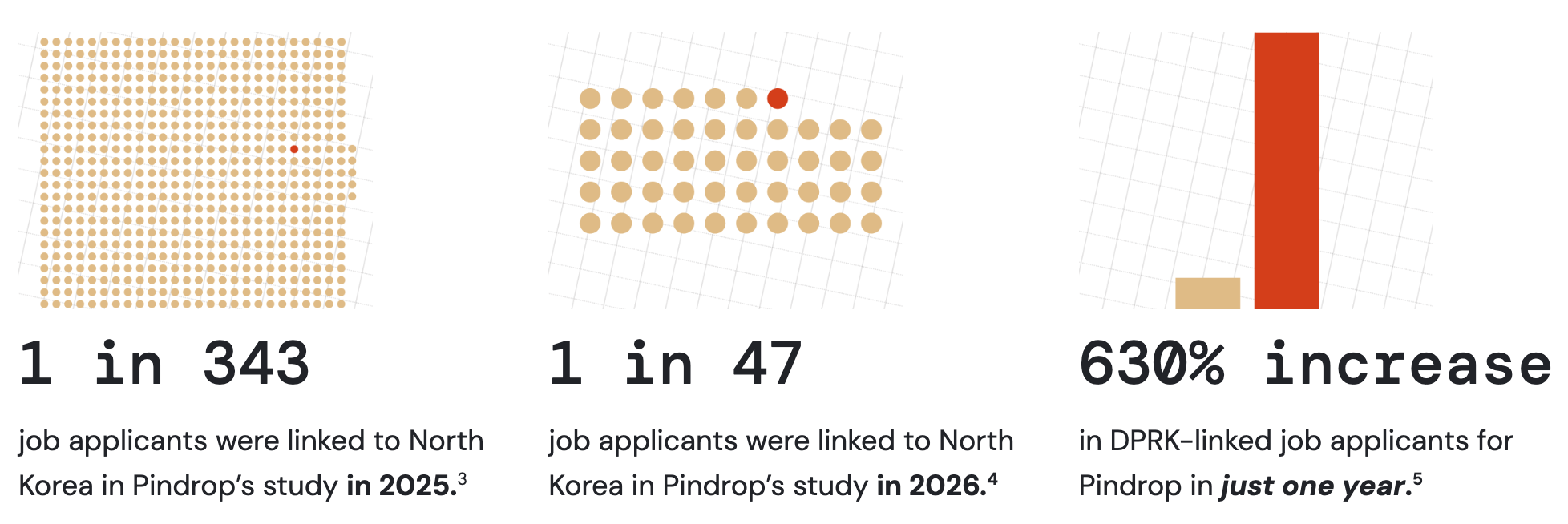
In 2025, the FBI released an official public service announcement warning about North Korean operatives trying to get hired at U.S.-based companies.¹ These operatives use fabricated or stolen identities to apply for jobs, funneling salaries back to the regime while conducting espionage from inside company walls.
Deepfake applicants show up with polished resumes, credible LinkedIn® profiles,2 and impressive work history, and when they log on for an interview, they seem well-prepared and professional. But these fake candidates often use real-time face-swap tools trained on photos, sometimes scraped from real people’s social media, filtered or manipulated voices, and work references that lead to companies that don’t exist or can’t be verified.
The consequences of hiring a fake candidate can be severe. Once inside a company’s systems, a fraudulent employee can steal data and intellectual property, or plant backdoors for future exploitation. Companies that unknowingly pay these workers may also find themselves in violation of federal sanctions laws. And being infiltrated by a state-sponsored actor can erode customer trust and bring unwanted scrutiny.
Real world case study
“Jamie” was likely a North Korean operative
In early 2025, Pindrop started investigating fake job candidates. Since then, the deepfakes have only gotten more convincing. Case in point: “Jamie,” a candidate for Pindrop’s Senior Software Engineer role.
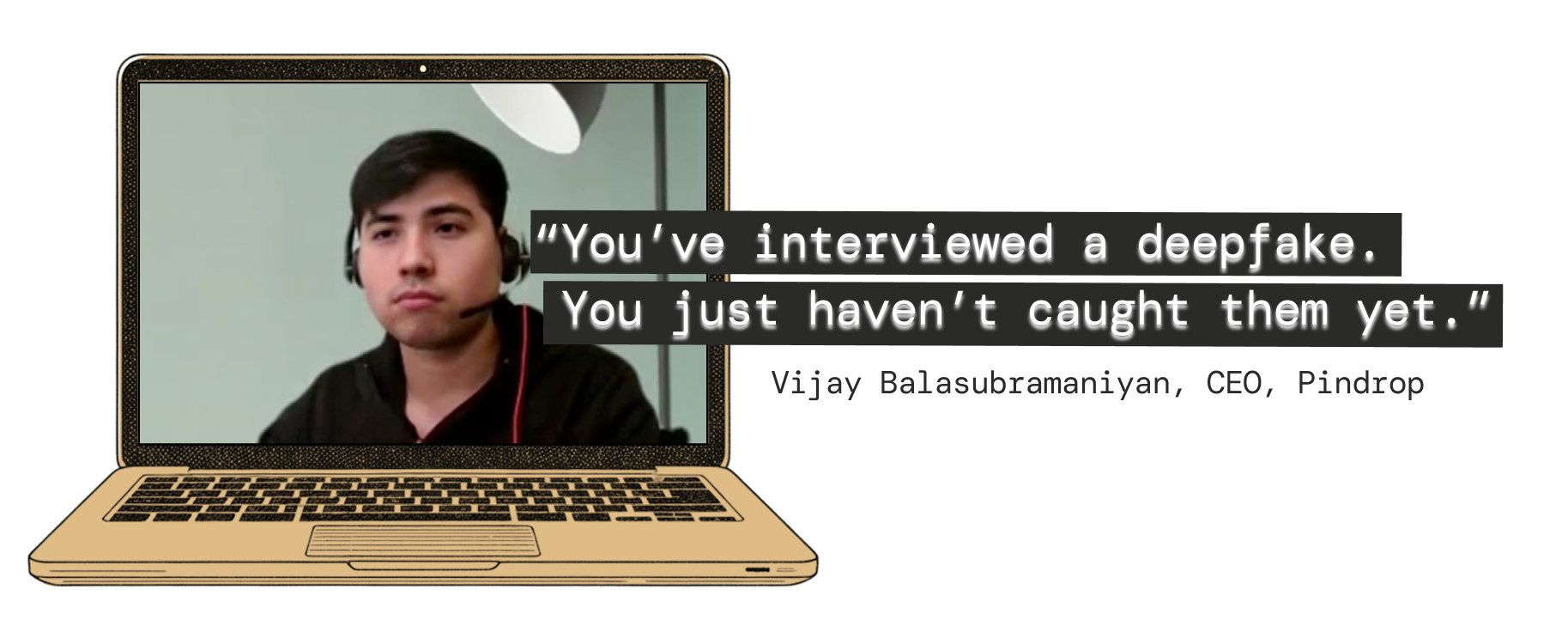
Jamie had clear answers, a polished delivery, and seemed well-prepared. It took a Pindrop Pulse® for meetings alert to raise concerns. Without it, he likely would have moved forward. Pindrop later linked Jamie’s IP address to North Korea.
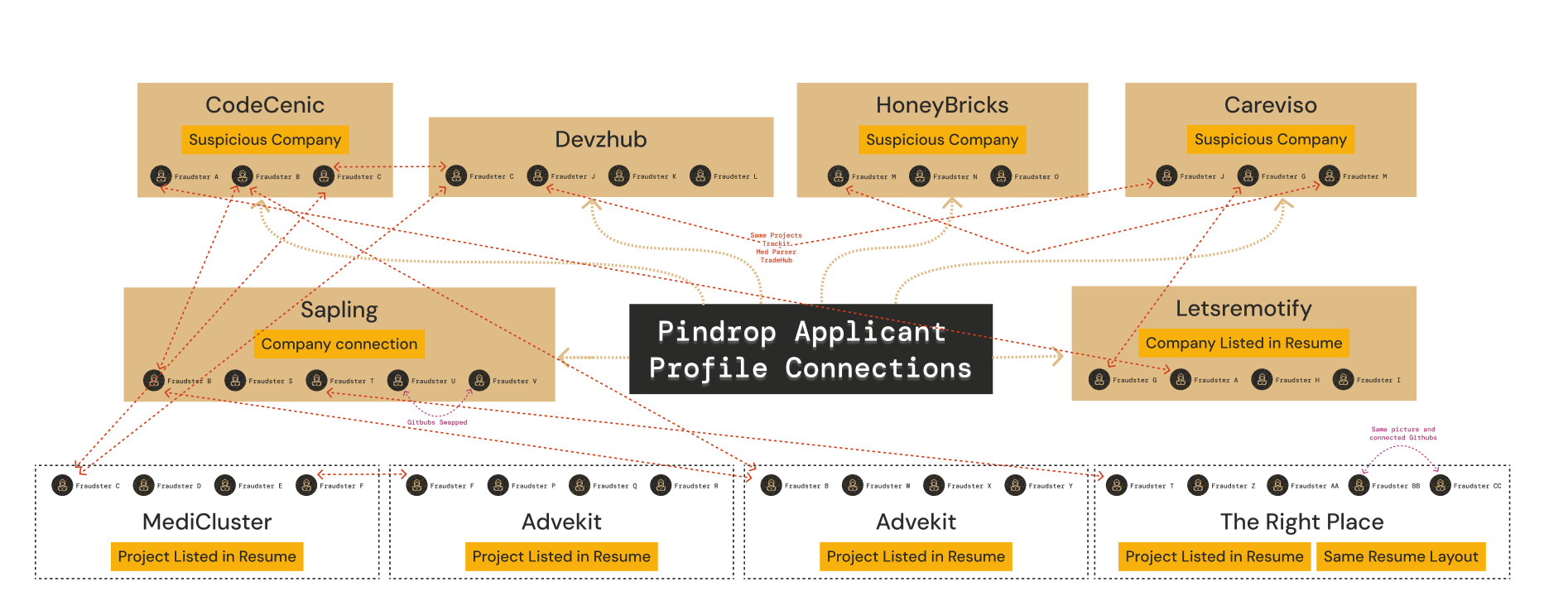
Pindrop researchers also noticed patterns in device telemetry, geography and network characteristics, email patterns, and synthetic identity construction amongst fake candidates. By extracting attributes from a confirmed fraudulent candidate, they built a relational graph of past applicants—and found that one confirmed fake applicant helped uncover a web of 23 past candidates with similar patterns.
One fake candidate. A whole web of fraudulent applicants.
[!CTA]
title: Don’t wait for a fake job candidate to slip past your defenses
text: Take action today.
button: Download the checklist
[/]
Text
1%
Text
Text
1%
Text
Text
1%
Text
Text
Lorem ipsum dolor sit amet consectetur. Sit convallis ullamcorper et varius venenatis blandit vitae hendrerit blandit. Hac aenean tellus consectetur elit orci aenean ipsum arcu. Turpis a laoreet sit rhoncus eros penatibus facilisis dolor tempus. Vitae gravida fames nunc dui scelerisque porta nulla ut. Sit mi volutpat ipsum odio nulla sociis.
Lorem Ipsum is simply dummy
Vitae eleifend mi lorem iaculis malesuada sit adipiscing vel. Sit massa ut etiam eu.