MULTIFACTOR AUTHENTICATION FOR CONTACT CENTERS
Authentication that stays in the conversation
Your teams make identity decisions in seconds, mid-conversation. Pindrop® solutions hand them evidence to work with: multi-signal authentication in the moment.

~14x
Surge in AI attacks since Q4 ‘241
Based on Pindrop customer data analysis from Q1 2026 in comparison to the previous five quarters.58s
Faster authentication at MSUFCU2
Pindrop, “One Year Later: Michigan State University Federal Credit Union Minimizes Fraud Exposure by Millions.”10%
Increase in member satisfaction2
Pindrop, “One Year Later: Michigan State University Federal Credit Union Minimizes Fraud Exposure by Millions.”

MULTIFACTOR AUTHENTICATION
What does multifactor authentication mean in live communications?
It means you use more than one source of identity evidence during the conversation, not relying on a single static check (like a login).
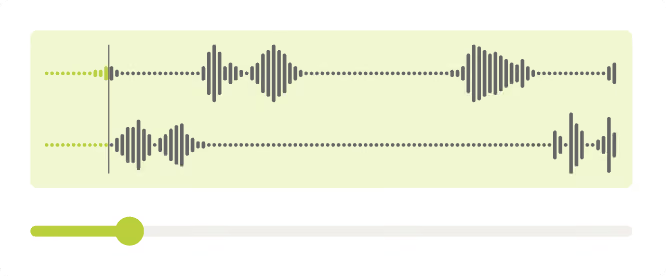
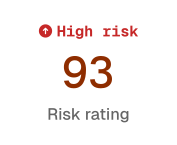
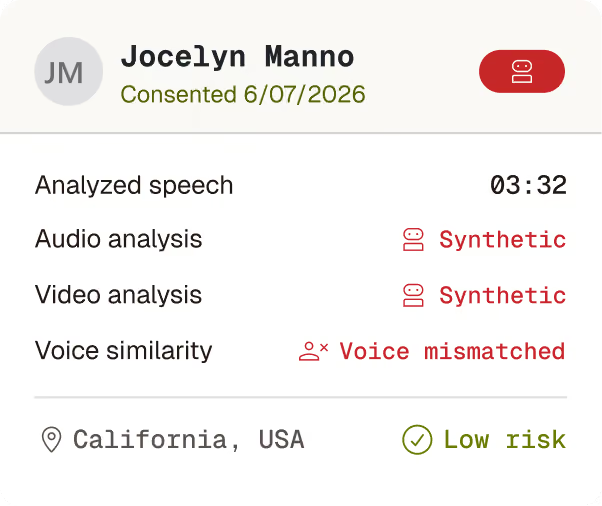
Login MFA pairs a credential with a second factor: an authenticator app, a security key, or a one-time code. Once someone is through, the check is done. A live call doesn't work that way. Risk can show up at any point during a call. That’s why Pindrop passively analyzes in the background. On a call, that can include voice, device, and call origin. In a meeting, it can include passive voice authentication, live audio and video analysis, and location risk.
That's continuous identity verification: risk reassessed as the conversation develops.
%201.avif)
%201.avif)
Live meeting workflow
How does Pindrop bring multifactor authentication to calls and meetings?
Authentication checks happen in real-time during the conversation, evaluating signals to determine if the participant or caller is who they say they are.
Caller authentication in contact centers
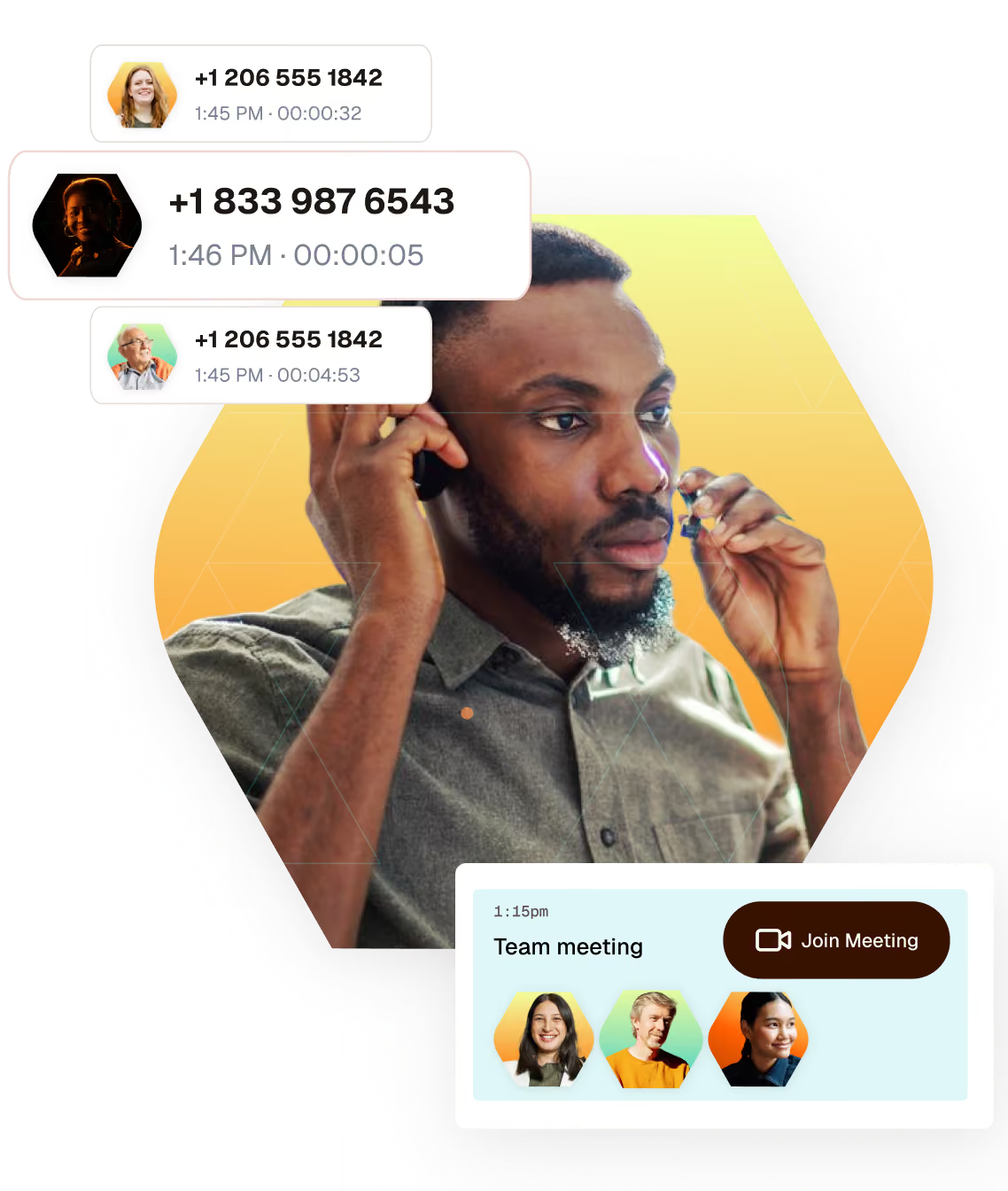
Pindrop® Passport authenticates callers from the moment a call connects, through your IVR and live agent workflows.
Participant verification in virtual meetings
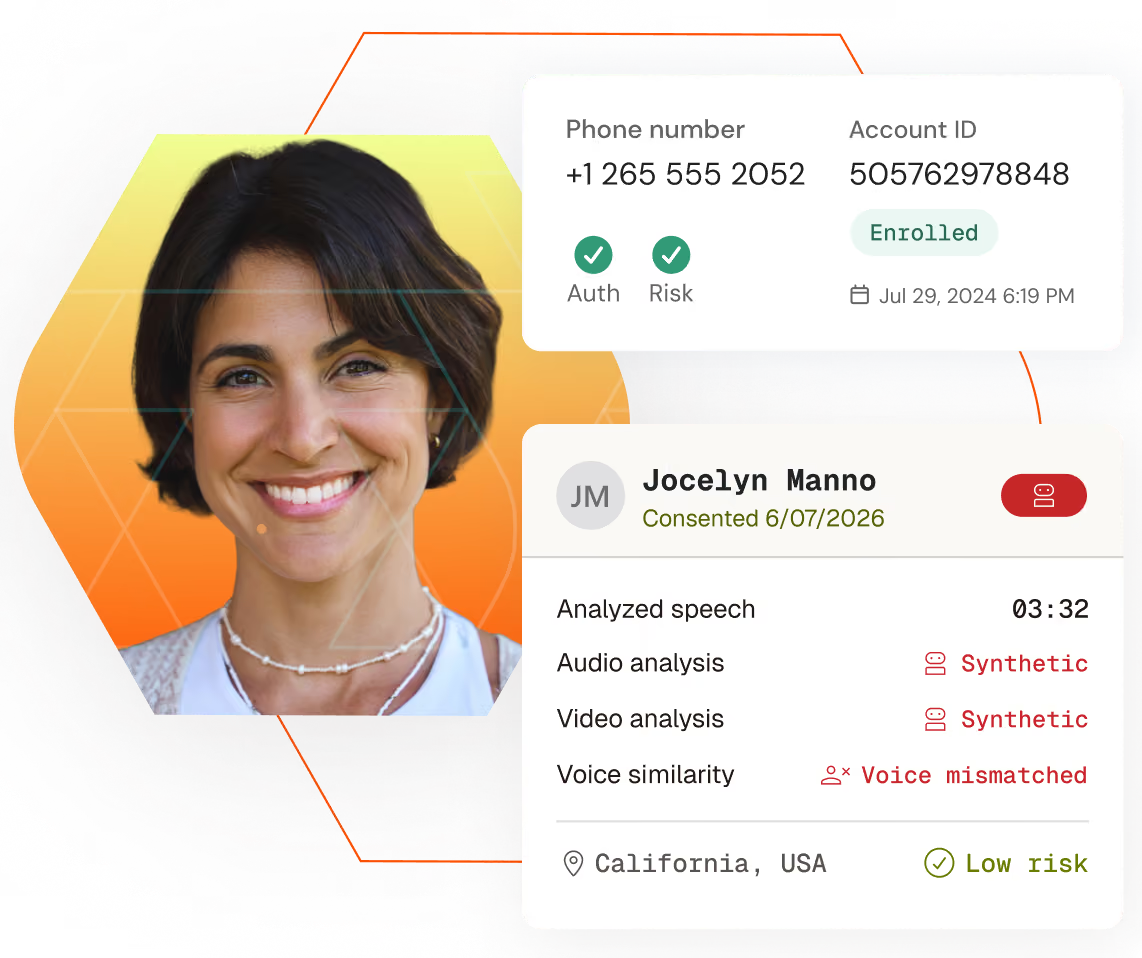
Pindrop Pulse® for Meetings verifies participant identity inside Zoom, Cisco Webex, and Microsoft Teams meetings. It pairs live audio and video deepfake analysis with passive voice authentication.

Where can multifactor authentication safeguard high-stakes interactions?
Anywhere a live conversation can move money, grant access, or expose data someone else wants.
Use case
Customer service and account recovery
Use case
Remote hiring and employee onboarding
Use case
Executive, board, and financial approvals
INDUSTRY
IT helpdesks and workforce support
THE PRODUCTS BEHIND IT
Powered by the Pindrop Platform
Pindrop technology enables enterprise contact centers to answer three key questions in order to detect AI-powered attacks: Is this identity human? Is this identity risky? Is this identity known?


WEBINAR
Modern authentication, happier customers
Deliver strong security and fast, low-friction customer experiences—especially in the voice channel—with passive, multifactor authentication in the workflows that need it.
Trusted in contact centers where a smooth CX is critical

"To date, there have been no member complaints on the new, frictionless process. And the contact center agents seem really happy."


"Security and experience aren’t opposites. Great companies know how to deliver both."

"On average, 200K+ callers per month were asked for their Social Security number using the legacy authentication process. That was cut by 55% month-over-month after Pindrop."

Don't assume. Verify.
Take the first step toward a safer, more secure future for your business.

Multifactor authentication for real-time communications FAQs
Disclaimer