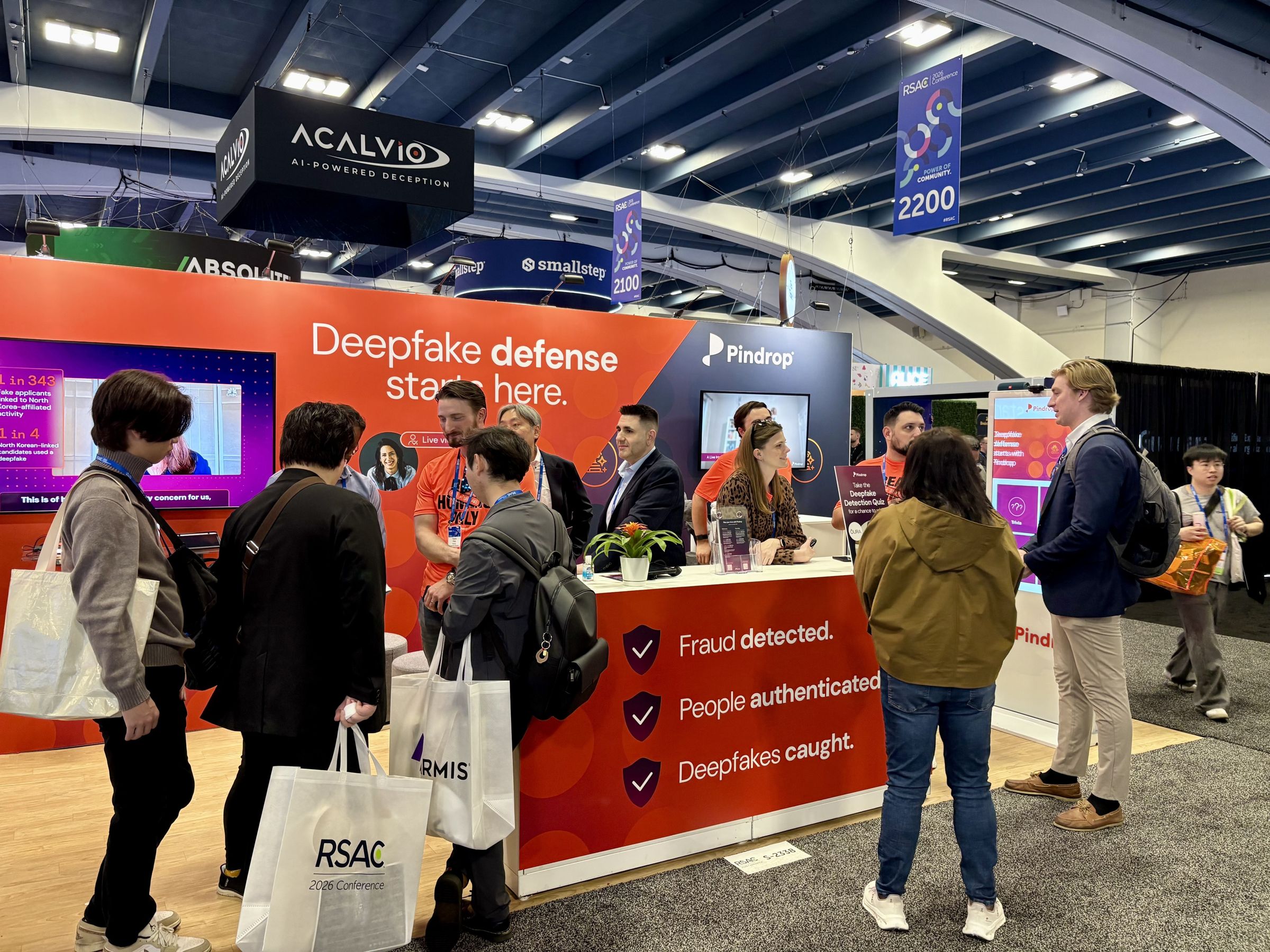


AI agents are already shopping, requesting refunds, and contacting customer service. Unfortunately, some of these bots work for fraudsters. As retailers decide what actions agents can perform on their websites, they also need to pay attention to phone lines, too.
Retailers are already deciding what agents can do
When AI agents interact with a retailer, most brands have no reliable way to tell a legitimate customer's agent from a fraudster's. Too often, they look and sound the same at checkout or on the phone.
So far, retailers are splitting into two camps on AI shopping agents:
- Some are drawing a hard line. Amazon blocked Meta's Muse from shopping on Amazon on September 20, saying, among other reasons, that Muse does not identify itself as an agent.
- Others are opening a controlled path, like Walmart. Its Agent Gateway and Agent Profiles let customers set spending limits, require approval before a purchase, and revoke an agent's access. Additionally, Shopify allows browser agents to read and update checkouts, but keeps the human in the loop when the buyer’s input is needed.
Meta, Walmart, Stripe, and others have also announced the Personal Agent Protocol, an open standard for how agents interact with businesses. These policies focus primarily on digital transactions, through an app or website.
Phone-based transactions, an essential touchpoint between retailers and customers, are left out of most conversations.
As we've talked with retail leaders, legal and compliance teams are also jumping in, pushing operational staff to tighten agent-handling protocols. They want fast answers to questions like, “Who authorized the agent making this purchase?” and “Who is on the hook if an agent goes rogue?” so the business stays protected while they work out how to handle a growing number of agent callers.
Meta Muse, Instinct, and more agents on the way
While still relatively new, AI agents can now phone businesses on a customer's behalf. Meta Muse and Instinct are perhaps the best-known, but others, like Grok Bot, are following quickly.
An exciting part of this agentic shift is that their potential is limited largely by our own creativity. There is no definite out-of-the-box list of tasks they can accomplish. Want to check the balance of that gift card you got for your birthday last year? Need to follow up for the eighth time about your home warranty claim? Perhaps an agent can do that for you.
As legitimate customers and fraudsters alike explore the possibilities of AI agents, retailers need to get savvy, and fast, at handling agentic callers.
How retail fraud works, and how AI agents change the picture
Retail fraud is nothing new. Fraudsters call with breached customer data, pass security questions, and leave with refunds, credits, and loyalty points. The phone is a top support channel, but it’s often the last door locked. Staff are trained to take care of frustrated customers, even to bend over backwards, and fraudsters know it.
Fraudsters rarely swing big because they don’t need to. (Of course, exceptions exist, like the thieves who posed as a food carrier to steal $11M in Nvidia chips). Additionally, individual losses are relatively low per event, at about $100 to $250. Still, this volume of incidenta will only grow with evolving voice agents.
In the first five months of 2026, Pindrop analyzed more than 20 million retail calls and confirmed over 115,000 fraud events. That is roughly one fraudulent activity event every two minutes, 3x higher than the rate of financial institutions.
Retailers know the usual plays, like:
- Returns and refund abuse. Item-not-received, missing-item, wrong-item, and empty-package claims.
- Boomerang fraud. A refund by phone, then the same item returned in store, so the retailer pays twice (or the fraudster just keeps the item after submitting the return).
- Concession abuse. Coupon, discount, and fee-waiver requests that should never have been granted.
- Account takeover. Access to loyalty points, stored value, and store card accounts. On one retailer's credit card phone line, about 1 in 204 calls was fraudulent, 2.6 times the rate of typical banking lines.1
- Social engineering. Scripts built to persuade a live representative to bend the rules.
- Channel hopping. Fraudsters jump to a different channel (chat to voice, etc.) when they fail in one.
And it’s often the same individuals that keep calling. At one retailer, 85% of confirmed fraud came from repeat bad actors.2
At a large ecommerce retailer, 86 fraudsters placed 8,906 calls from 6,049 devices. At another customer, a single caller called multiple times a day to return canned goods, equating to tens of thousands of dollars throughout the year.3
AI agents change that picture in four ways:
- Scale. A human can only make so many calls. A bot, however, can request hundreds of refunds autonomously. Pindrop data shows AI-powered attacks rose 2,310% between the fourth quarter of 2024 and the third quarter of 2026, growing 10x faster than traditional attacks.4
- Camouflage. A customer's assistant and a fraudster's bot can make the same seemingly legitimate request in the same polite (or frustrated) voice. At one retailer, synthetic calls were 1.17% of agent calls but 11.78% of fraud calls.5
- Reconnaissance. Bots can map the IVR by phone, which isn’t overtly dangerous. Over time, they collect data, probe for weak points, and prepare attackers for downstream assaults.
- Mixed intent. Agents are not 100% bad. Real customers send them for legitimate tasks, so assuming every automated caller is a threat creates friction for good customers.
Pindrop recorded 1.88M AI-agent detections in about three months, from July to October 2026, and 94% were labeled good AI agents and 6% bad. 6, 7 As agent calling capabilities come out of beta, retailers need to prepare now to handle them.
Not every agent caller is a threat
To start your preparations, consider these three categories to help classify agent callers:
- Good. The caller is legitimate, but you still need to know it is an agent and decide what it is allowed to do. This includes use cases like a customer's assistant checking on an order, changing a subscription, or initiating a return.
- Nuisance. This is automated traffic that calls repeatedly, perhaps to check order status, every few minutes, every day. This ties up interactive voice response (IVR) lines, drives up volume, and lengthens the wait for live customers.
- Bad. A bot files false item-not-received or empty-package refund claims at volume, or maps the IVR before an account takeover. Its requests can sound and feel legitimate.
In retail, bots tend to be after one of three things. Some want money, such as credits, fee waivers, refunds, or retention offers. Some want access, so they trigger multi-factor authentication codes ahead of an account takeover. Others want information, such as order status, inventory, or basic account details.
Any of these can cost live customers their place in line, because queue time and agent capacity get used up along the way. Retention, operations, and security each own a different piece of the problem, so it is imperative that these teams proactively share information and work toward a unified security and response layer.
AI agent detection comes first
You cannot set a policy for a caller you cannot identify, especially as agent and human callers are increasingly difficult to differentiate. You need to know if the caller is an AI agent or a human, then decide what it can do.
Blocking every bot is tempting. It also blocks customers who use AI assistants, and that traffic is growing. A better approach sets policy by risk:
- Lower risk. Things like checking order status, store hours, product availability, and return policy. Permitting agents to conduct these tasks may generally be safer, but lower risk is not no risk, because reconnaissance bots ask for order status or seemingly harmless account information, too.
- Higher risk: This includes placing an order, taking a payment, issuing a refund or credit, changing a shipping address, resetting credentials, and redeeming gift cards or loyalty points. For this tier, retailers can forbid agents or require a step-up with a human.
Pindrop BotStopper™ technology supports that first step. It detects synthetic speech early in the call and checks callers against known AI voices inside existing call flows.
Your policy then decides the response, based on how you want to handle agents and their differing objectives: route lower-risk agents to an automated channel, step up or deny higher-risk requests, and alert fraud teams to suspected abuse.
Playing the long game
The long-term play is to accommodate AI agents, not to box them out. Customers will keep sending agents, and some retailers, like Walmart, are building the rules to welcome them.
When agents call customer service, staff need to know: Who authorized this agent? Is the human behind it who they claim to be? What is the agent allowed to do? Legacy identity and authentication tools like knowledge-based authentication and one-time passwords are frequently defeated. Even recognizing an AI voice does not establish that a real customer authorized it.8 The new world has two customers: the agent on the line, and the human behind it.
Pindrop is already working on this problem. Pindrop researchers identified Meta Muse's AI voices on live calls seven days before Meta announced its outbound-calling beta. Today, Pindrop BotStopper™ technology helps organizations start their agent-handling journey by signaling when a machine is on the line and checking the agent against a registry of more than 5,000 AI voices. More is coming as we help retailers verify agents and govern what they can do.
What should retailers do next?
- Size the traffic. Find out what share of inbound calls is automated and which job, money, access, or information, bots are doing on your lines.
- Map what an agent can reach. Check whether an automated caller can get to higher risk workflows.
- Set risk tiers. Decide what agents may do, what needs a human step-up, and what stays off limits for now.
- Extend your digital policy to voice. If your policy covers agents on your website, adapt it to cover the phone.
Agents are not waiting to call and peak season is here again. Know what is calling, then decide what happens next. See how Pindrop BotStopper™ technology detects AI agents and automated callers in your enterprise contact center. See BotStopper in action.
Key results
1%
Text
1%
Text
1%
Text
Lorem ipsum dolor sit amet consectetur. Sit convallis ullamcorper et varius venenatis blandit vitae hendrerit blandit. Hac aenean tellus consectetur elit orci aenean ipsum arcu. Turpis a laoreet sit rhoncus eros penatibus facilisis dolor tempus. Vitae gravida fames nunc dui scelerisque porta nulla ut. Sit mi volutpat ipsum odio nulla sociis.
Lorem Ipsum is simply dummy
Vitae eleifend mi lorem iaculis malesuada sit adipiscing vel. Sit massa ut etiam eu.