

Axios reported that AI agents are entering banking systems faster than banks can respond, and that Morgan Stanley, Bank of America, JPMorgan, Wells Fargo, and others are racing to contain the risk.
JPMorgan’s CEO had already drawn the line against outside AI agents days earlier.
Detecting bad bots is only half the job. Humans also use agents to check balances, dispute charges, and transfer funds, and good bots and bad bots can sound alike. So what should happen when an AI agent calls? Here are three tips from our team.
1. Measure agent traffic before setting policy
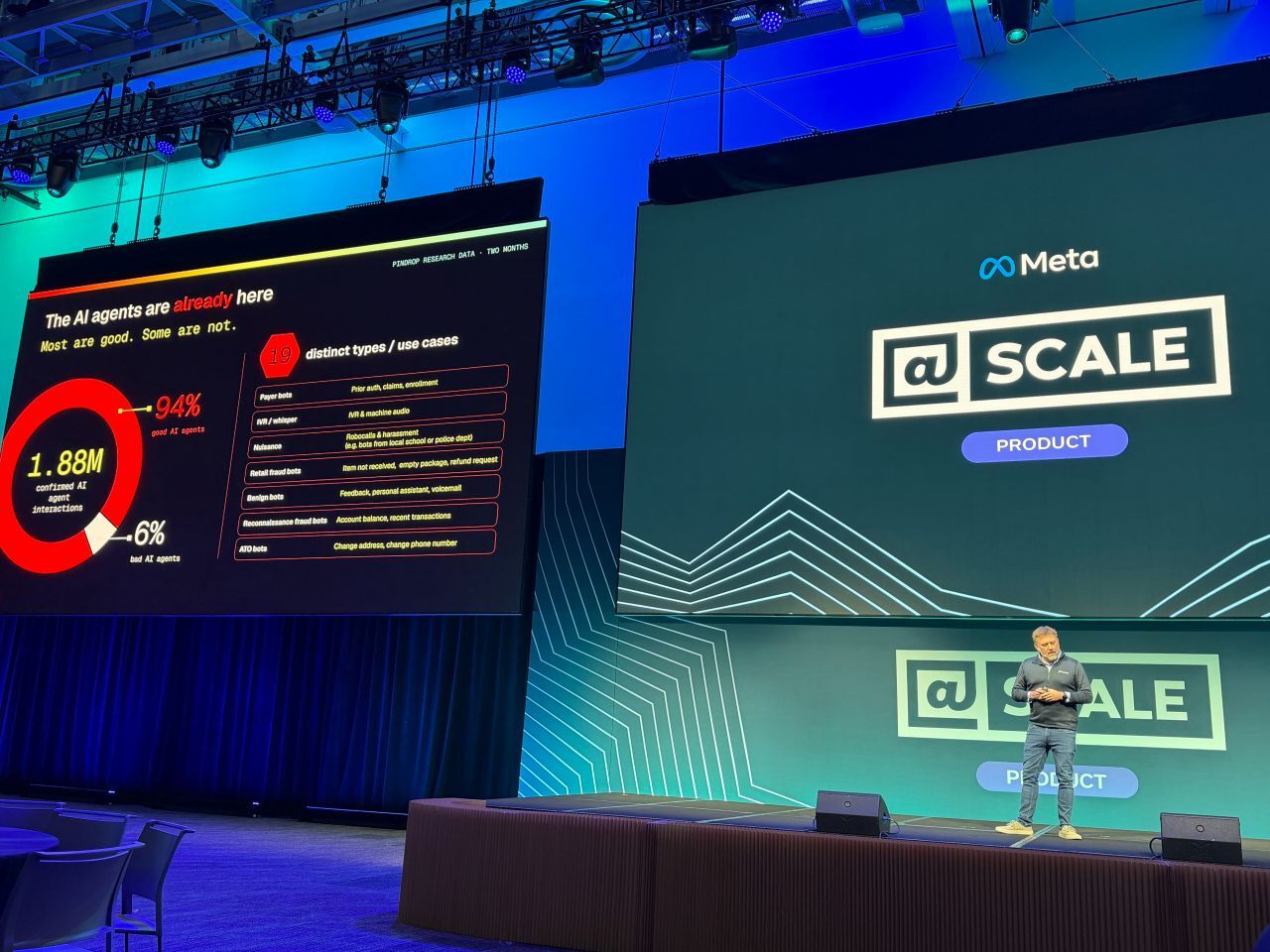
To size the problem at your financial institution, start by establishing a baseline. In just two months, Pindrop identified 727K AI agents or bots, roughly 1 in 80 calls.1
Of those, 94% came from agents acting legitimately, and 6% were malicious. Both matter: the good ones need to get routed correctly, and the bad ones need to be detected and managed.
Questions to help determine your voice agent baseline include:
- What share of inbound calls come from automated callers?
- Which workflows do they touch?
- What do they ask for?
- Which requests are routine, and which could change an account?
AI agent detection solutions flag voice bots on inbound calls and check them against known AI voices, which helps teams build that baseline.
2. Set up green, gray, and red routing
To reduce risk from new voice bots, like Meta’s Muse, sort each call by what the caller is and what it’s asking for.
If the caller is a human, give it a human path. If it’s an agent, give it an agent path. That path should match the level of risk. Higher-risk requests, and agents flagged as risky, should face more scrutiny.
Within the agent path, use three lanes:
- Green: serve it. A known agent making a routine, read-only request, such as a balance inquiry, can go to an automated channel built for machines, or to your own agents or staff.
- Gray: verify it. An unknown agent, or a known agent asking for something sensitive, needs more attention. An address change, payout update, or transfer could require a step-up check, explicit customer approval, or a team trained for agent calls.
- Red: refuse or restrict it. Agents flagged as bad, or showing risky signals such as a hidden phone number or a misleading time zone, should be refused or limited to a restricted path.
That helps reduce risk from vo ice agents and frees your people to focus on customers who need human judgement, empathy, and support during hard moments.
“Adoption is happening before most enterprises have a policy for it. Checking a balance and changing a payout address carry very different risks,” said Rodolfo Raimundo, research scientist at Pindrop.
3. Rehearse the “day after” for the voice channel
Axios also reported that banks are doing “day after” scenario planning, so they can quickly secure accounts or restore access if agents cause issues.
Most of that focuses on agents interacting digitally within customer accounts. Include the voice channel, where agents are already calling support centers and asking for changes.
A clear policy gives everyone a path to fix things when an agent makes a mistake. That helps banks, and it also helps customers feel more comfortable letting agents call for them. Plan for situations like:
- An agent completes a request the customer didin’t authorize, like a transfer. Who reviews it, how fast can you reverse it, and how do you tell the customer?
- A customer’s credentials are exposed. What extra checks apply to the next calls? Who locks the account?
- A legitimate agent is turned away by mistake. How does the customer reach a human quickly?
Tell customers up front what an agent can and can’t get done by phone. A balance check might be fine, while a payout change needs the customer’s own approval. Publish it where customers will see it, and make sure your phone menus and staff say the same thing.
Voice is fluid, and a conversation can drift. Keep checking what an agent asks for during the call, not only who it is at the start.
“With Meta’s Muse and other personal AI agents picking up the phone for us, there’s a new challenge: not every bot is bad, and not every bot should be trusted. Right identity is no longer sufficient. We now also need to determine the agent's intent and action in the new world.” — Neeraj Gupta, chief technology officer, Pindrop
What comes next for your financial institution
So what should happen when an AI agent calls? It depends on who it is and what it’s asking for.
The goal is to know what’s calling, send routine agent requests to automated channels, verify the sensitive ones, and save your people for the customers who need them.
Pindrop BotStopper™ technology helps contact centers detect AI agents and bots and check them against known AI voices. That gives teams the first signal they need to decide how to handle each call.
Talk to a real human about AI agent calls at your financial institution.
Key results
1%
Text
1%
Text
1%
Text
Lorem ipsum dolor sit amet consectetur. Sit convallis ullamcorper et varius venenatis blandit vitae hendrerit blandit. Hac aenean tellus consectetur elit orci aenean ipsum arcu. Turpis a laoreet sit rhoncus eros penatibus facilisis dolor tempus. Vitae gravida fames nunc dui scelerisque porta nulla ut. Sit mi volutpat ipsum odio nulla sociis.
Lorem Ipsum is simply dummy
Vitae eleifend mi lorem iaculis malesuada sit adipiscing vel. Sit massa ut etiam eu.