


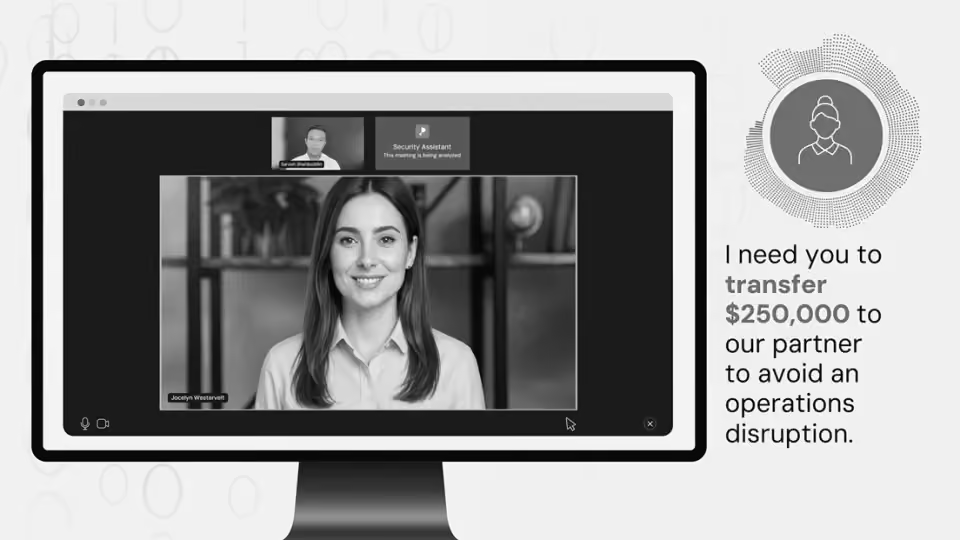
Critical business conversations like hiring decisions, money transfers, and access requests are occurring in video meetings every day—and attackers know this. Armed with AI-generated voices and faces, they attempt to infiltrate and exploit these discussions, accessing systems, stealing data, cashing paychecks, and more.
Three common fraud tactics in virtual meetings
Hiring fraud: Deepfakes join interviews, attempting to trick recruiters, land a job, cash paychecks, and infiltrate internal systems.
Executive impersonation: Imposters join meetings as high-level leaders, demanding funds and access. In one case, fraudsters walked away with $25M after using a deepfake of the company's CFO in a video call.
Corporate espionage: Fraudsters target employees to invade systems and steal IP, data, and cash. Nearly 40% of cybercriminals use a meeting platform as the second step in a multichannel attack.
Arm your meetings with deepfake defense
Pindrop® Pulse layers deepfake detection, participant authentication, and location intelligence to provide risk alerts during live, virtual meetings. Watch the video to learn how this robust solution can shield your critical conversations from fraudsters.
Talk with a meeting security expert
The deepfake threat is here. It's time to put up defenses to better protect your meetings today. Take the first step and connect with us.
Key results
1%
Text
1%
Text
1%
Text
Lorem ipsum dolor sit amet consectetur. Sit convallis ullamcorper et varius venenatis blandit vitae hendrerit blandit. Hac aenean tellus consectetur elit orci aenean ipsum arcu. Turpis a laoreet sit rhoncus eros penatibus facilisis dolor tempus. Vitae gravida fames nunc dui scelerisque porta nulla ut. Sit mi volutpat ipsum odio nulla sociis.
Lorem Ipsum is simply dummy
Vitae eleifend mi lorem iaculis malesuada sit adipiscing vel. Sit massa ut etiam eu.