


MDD: The new standard for every AI-first enterprise
As AI advances, so do the needs for governance, accountability, and transparency. At Pindrop, as developers of models that detect nefarious AI use, our research team faces a challenge that many AI-first companies do: documenting exactly how the models work.
Pindrop isn’t alone in this challenge. Any organization that uses models that affect customers, security, or high-stakes decisions must keep a precise activity log of its machine learning systems. Model Development Documentation (MDD) is the paper trail that helps organizations measure, validate, and govern their models. Good MDDs must answer:
- What does the model do?
- How was it built?
- How does it perform?
- How is risk managed?
The research team cut MDD creation down by days, not hours
The challenge with MDD is that models are constantly changing, and documenting those changes is time-consuming. Model development moves fast. Performance refreshes. Data changes. Every update creates another documentation cycle that must stay consistent, reviewable, and aligned with governance expectations.
At Pindrop, we developed a Model Development Documentation agent built on Amazon Bedrock AgentCore. And the results speak for themselves:
- 3x faster MDD creation (From 25 days to 8 days)
- Manual effort: 168 hours → 44 hours per MDD (3.7x more efficient)
- Annual impact: ~0.6 FTE saved across ~10 MDDs, plus ~0.2 FTE expected from an upcoming MRM Q&A agent
Want to see what the output looks like? Here's a snippet of a document about the MDD Agent generated by the tool itself:
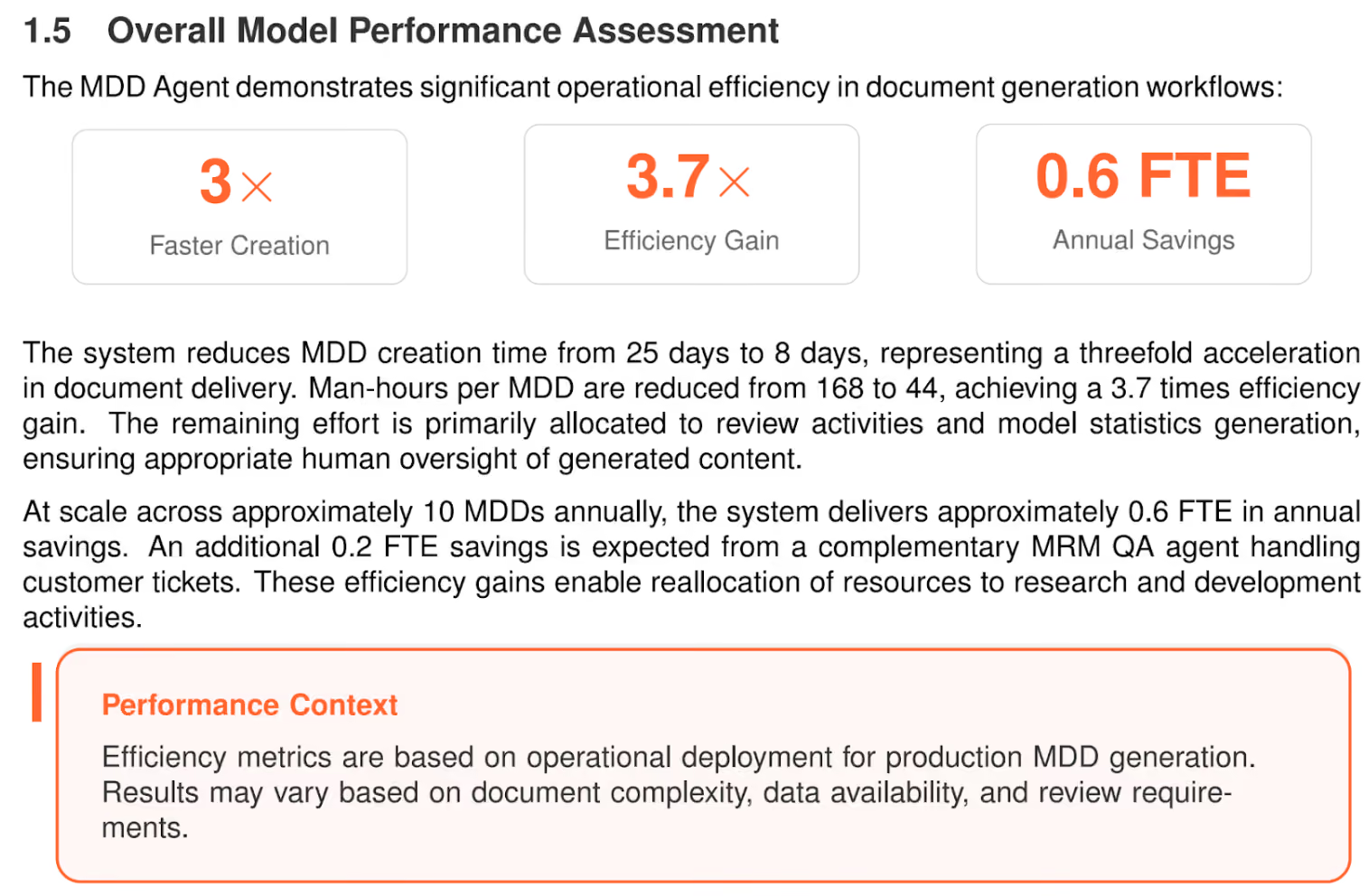
This is AI applied thoughtfully, driving speed and consistency without treating governance as an afterthought.
Good docs require complex orchestration
MDD creation isn't just writing. It's orchestration across inputs, stakeholders, and iterations.
Performance metrics need consistent formatting. Updates require synchronized changes across sections. Content must match templates and terminology. Small errors create long review loops. Teams spend time gathering context rather than improving models.
And even experienced teams drift over time—one group uses slightly different metric definitions or table layouts than another. Those changes compound, making reviews harder when customers compare documentation across products. Standardization matters as much as speed.
An agentic agent is the perfect engine for complex docs workflows
MDDs require a multi-step process. That process might look like:
- Collect inputs
- Apply consistent structure
- Generate performance results
- Update only what changed
- Compile a final document
An agent coordinates those steps reliably: less like a blank-page writer, more like a workflow engine that drafts, refactors, updates, and assembles outputs consistently.
The agent built on Amazon Bedrock AgentCore let us orchestrate multi-step tasks with session management, memory persistence, and traceability. We use Claude Opus 4.6 for content generation with native PDF parsing.
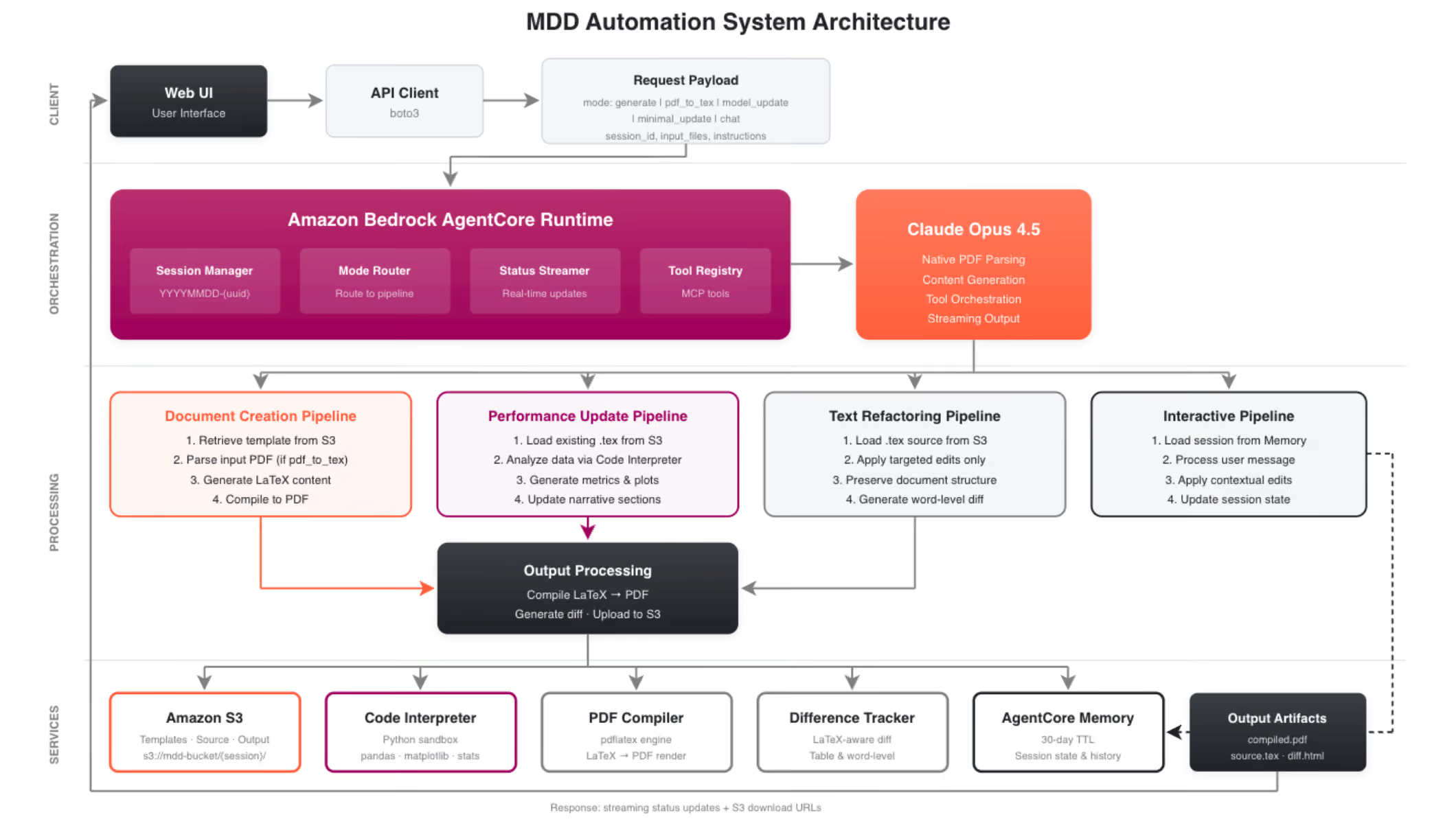
The system also integrates Code Interpreter for adaptive data analysis, automatically generating plots and calculating metrics from raw model outputs. This isn't just drafting, it's executing a guided process that mirrors how documentation teams actually operate.
Modes provide flexibility with guardrails
Real documentation needs vary, so our MDD agent supports five modes:
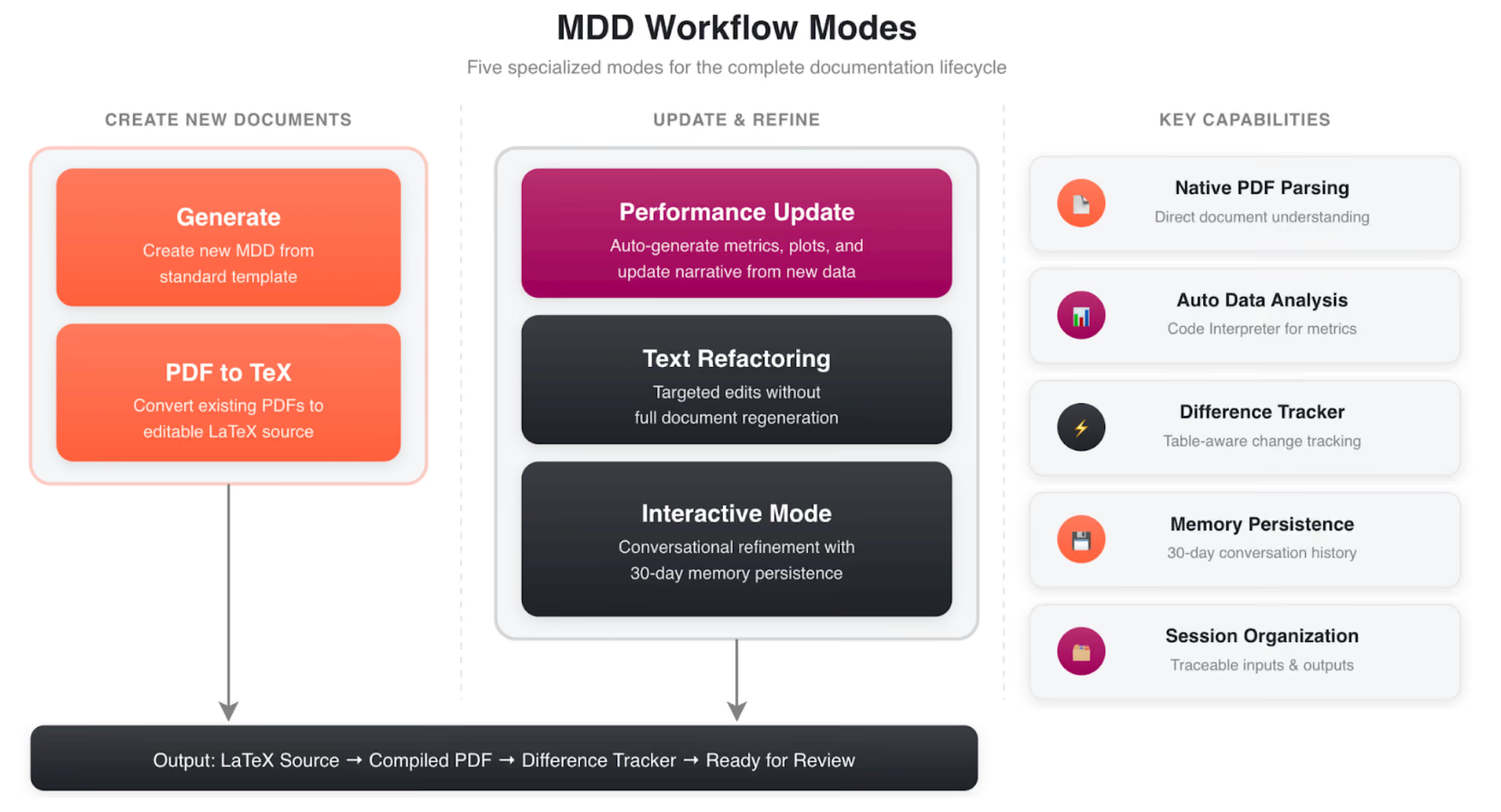
- Generate Mode: Create a new MDD from a standard template with intelligent content generation.
- Performance Update: Refresh metrics, plots, and narrative from new performance data.
- Text Refactoring: Targeted edits without full rewrites, preserving document structure.
- PDF to TeX: Convert existing PDFs to editable LaTeX so updates don't start from scratch.
- Interactive Mode: Conversational refinement with memory persistence. The system remembers your previous edits and conversation context.
This matters because most documentation time is spent on updates and refinements and not on first drafts.
Standardization without rigidity
The biggest benefit of an agent-driven workflow is making standardization achievable.
Instead of each product team reinventing the documentation structure, the system uses shared templates and consistent expectations for how performance is described, metrics are presented, and limitations are communicated.
Product-specific nuance remains, but differences become intentional—not accidental artifacts of different authoring styles.
For customers evaluating multiple Pindrop solution capabilities, this coherence reduces confusion and cuts down on follow-up questionnaires asking for the same information in different formats.
Automated performance statistics
In Performance Update mode, the workflow takes new model outputs and automatically:
- Computes key metrics
- Generates standard plots
- Detects column names and data structure adaptively
- Updates the relevant narrative and tables so the story matches the numbers
This eliminates manual spreadsheet work and copy-paste errors while keeping humans responsible for validating results and approving final language. Performance refreshes become a repeatable cycle, not a mini-project.
Built for reviewability
Faster only matters if it stays reviewable. The system is designed around a review-first mindset:
- Everything stays organized: Each documentation cycle is grouped together so reviewers can easily find the inputs, drafts, and final outputs in one place
- Changes are easy to spot: Reviewers can quickly see what changed between versions—without hunting through pages line by line.
- Consistent format every time: Documents follow the same structure across products, so it’s easier to review and compare
- Easy to continue where you left off: The system remembers prior edits and context, so updates don’t require re-explaining the same information
AI accelerates assembly and updates. Humans focus on judgment, validation, and sign-off.
Research GPT: Agents beyond documentation
MDD automation isn't our only agent application. Research GPT is an AI-powered conversational tool that lets users query ANI validation and Spoof Detection data using natural language.
It handles:
- Knowledge questions: Explaining methodology using internal docs
- Data questions: Translating natural language into queries, returning tables and charts
- Call diagnostics: Analyzing specific interactions with relevant signals
No hunting for the right query, remembering field names, or manually assembling investigation evidence.
Now that we have the infrastructure for agent-driven workflows, we can apply it beyond documentation to research, support, and investigation cycles using the same principles: grounded answers, clear sources, repeatable workflows.
What's next
Two paths forward: scale standardized MDD generation and automated updates across more products, and expand agent support for the question loop after documents are delivered (both customer questions and ticket-based workflows).
The goal isn't just faster documentation. It's smoother governance, fewer repetitive cycles, and more time invested in improving the models themselves.
AI agents are most valuable when they execute real workflows, not just generate text.
By building on AWS Bedrock and AgentCore, Pindrop is standardizing MDDs, automating performance updates, and improving documentation consistency and reviewability. Meaningful time savings, reduced manual effort, and smoother risk review and governance cycles.
That's how AI should work in high-trust environments: accelerate the work, strengthen consistency, and keep human review in control.
[!CTA]
title: Now discover how the nefarious use of AI affects enterprises.
button: Read the guide
[/]
Key results
1%
Text
1%
Text
1%
Text
Lorem ipsum dolor sit amet consectetur. Sit convallis ullamcorper et varius venenatis blandit vitae hendrerit blandit. Hac aenean tellus consectetur elit orci aenean ipsum arcu. Turpis a laoreet sit rhoncus eros penatibus facilisis dolor tempus. Vitae gravida fames nunc dui scelerisque porta nulla ut. Sit mi volutpat ipsum odio nulla sociis.
Lorem Ipsum is simply dummy
Vitae eleifend mi lorem iaculis malesuada sit adipiscing vel. Sit massa ut etiam eu.